
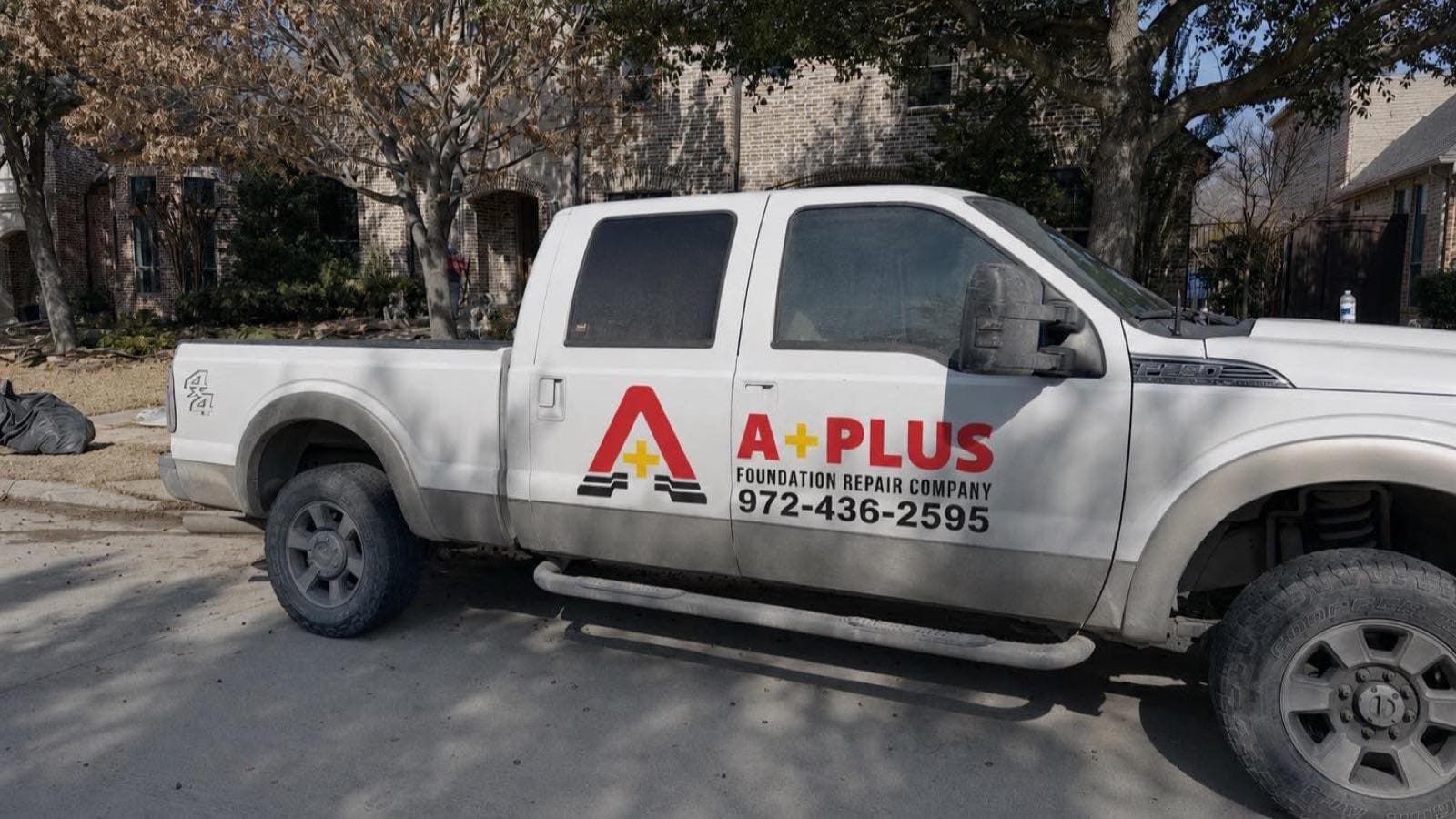
Allen is predominantly post-1990 construction, and that shapes both the problems we see and the conversations we have. Homeowners here often assume a house built in the 2000s cannot have a foundation issue. The Blackland clay beneath Allen disagrees, and a dry Texas summer will demonstrate it.
Why foundations move in Allen
The clay under Allen is deep and highly reactive, capable of losing several inches of volume across a hot, dry summer. Because the active layer is thick, piers here need real depth to reach material that stays put seasonally. Shallow piering in Allen buys a few years at best.
The homes we work on in Allen
Most Allen homes are post-1990 slab-on-grade, and a significant share are post-tension. Post-tension slabs need pier placement planned around the tendon layout, which is a design step rather than a field improvisation. Getting it wrong can compromise the slab in a way that is expensive to undo.
Water, terrain, and drainage
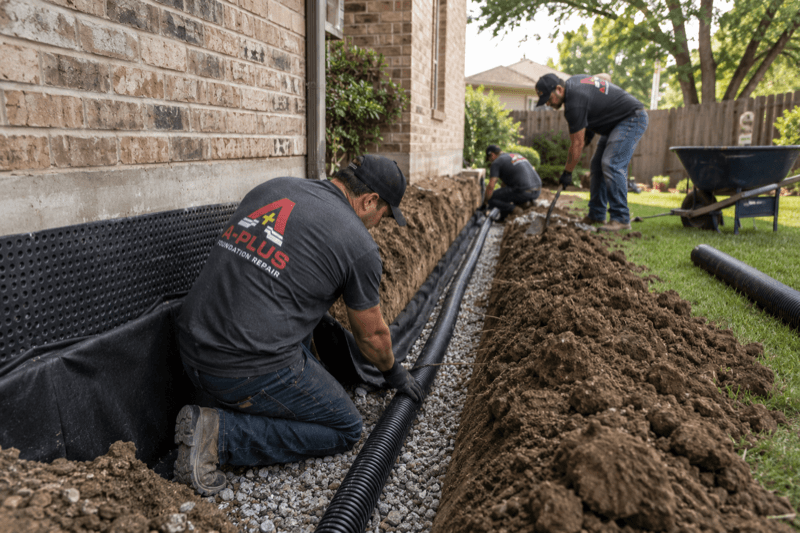
Allen's newer subdivisions have engineered drainage, which helps, but nearly every lot has an irrigation system and those systems are the main variable in local soil moisture. We see foundations where one zone has been over-watering a single side of the house for years and the differential has done the damage.
What Allen homeowners notice through the year
In Allen the variable that matters most is irrigation, not rainfall. Homes where one sprinkler zone has been over-watering a single elevation for years develop a moisture differential across the foundation that produces movement even in a mild summer. If cracking is concentrated on one side of an Allen home, checking sprinkler coverage on that side is a genuinely useful first step before anything else.
What our crews see in Allen
The most valuable advice we give Allen homeowners costs nothing: check the irrigation system for even coverage around the foundation and keep summer watering consistent rather than intermittent. A surprising share of the settlement we measure in this city traces back to a sprinkler zone that was never balanced.
Permits and inspections in Allen
Structural foundation repair generally requires a permit in Allen. On post-tension slabs, documentation of how the repair accounts for the tendon layout is typically expected. We prepare and file both.
Independent sources: soil classifications for Collin County can be looked up through the USDA Web Soil Survey, and Texas A&M AgriLife Extension publishes guidance on managing expansive soils around Texas foundations.
Areas of Allen we serve
We serve all of Allen and the surrounding Collin County communities.
- Twin Creeks
- Bethany Lakes
- Watters Creek area
- Allen Station
- Cottonwood Bend
- Star Creek
- East Allen
Our services in Allen



Foundation Repair in Allen: Common Questions
Answers specific to Allen and the surrounding Collin County area, covering local soil, permitting, cost, and timelines.
Why do foundations fail in Allen?
The Blackland clay under Allen is deep and highly reactive, and it can lose several inches of volume across a hot, dry Texas summer. That seasonal shrink-swell cycle is the single largest cause of foundation damage in Allen, and it acts hardest around the perimeter of a slab, where soil dries fastest and rewets fastest. Tree roots, poor lot drainage, and under-slab plumbing leaks all accelerate it.
How do I know if my Allen home has a foundation problem?
Look for diagonal drywall cracks running from the corners of doors and windows, doors that stick or will not latch, stair-step cracks in exterior brick mortar, gaps opening where trim meets brick, and floors that feel sloped or bouncy. One sign alone may have another explanation. Two or more together in a Allen home usually means the deep Blackland clay beneath it is moving and the foundation should be measured.
How much does foundation repair cost in Allen?
There is no honest flat answer, because cost depends on how many piers your home needs and how deep they have to go to reach stable soil. A localized repair on one corner costs a fraction of stabilizing a full side of a house. We take elevation readings across your floor first and then give you a written pier count and price. Free evaluations for Allen homeowners, no obligation.
Do I need a permit for foundation repair in Allen?
Most municipalities in and around Collin County require a permit for structural foundation repair, and some require an engineer's report before issuing one. We handle permitting as part of the job and pull whatever Allen requires, so you are not left navigating the city process yourself.
How long does foundation repair take in Allen?
Most residential repairs in Allen are completed in one to three working days. Larger homes, or projects that combine piering with drainage correction, can take longer. You can normally stay in the house while we work, and we tell you in advance which days involve heavy equipment.
What kinds of homes do you repair in Allen?
Allen is predominantly post-1990 slab-on-grade. Newer construction is not immune when the clay beneath it contracts sharply. We work on both slab-on-grade and pier-and-beam foundations, and the right method depends on what your home actually sits on, not on which service we would prefer to sell.
When is the best time of year to repair a foundation in Allen?
We work in Allen year-round and no season makes the repair less effective. Late summer and early fall, when the deep Blackland clay is at its driest and most contracted, often show the truest picture of how far a home has settled. Waiting for a particular season while cracks widen generally costs more than it saves.
Do you offer free estimates in Allen?
Yes. Evaluations for Allen homeowners are free and carry no obligation. A technician measures elevations throughout the home, inspects the exterior and any accessible crawl space, and explains what the numbers mean in plain language. You receive a written scope and price. Call (972) 436-2595 to schedule.
Is your work in Allen warrantied?
Yes. Our foundation leveling work carries a Lifetime Transferable Warranty. If an area we stabilized settles again we return and adjust it at no charge, and because the warranty transfers with the property, it protects resale value when you sell your Allen home.
Do you serve all of Collin County?
Yes, we serve Allen and the surrounding Collin County area, along with the wider Dallas/Fort Worth metroplex. If you are unsure whether your address falls inside our service area, call (972) 436-2595 and we will tell you straight away.
We also work near Allen
Allenis one of many North Texas communities we serve. If you are just outside the city limits we very likely still cover you — call (972) 436-2595 and ask.
Texas Weather Changes Fast. Don't Wait.
Foundation damage doesn't fix itself—it only gets more expensive. Protect your home's value before the next heavy rain cycle shifts your soil. Get a completely free, no-pressure structural evaluation today.